Reflections, on the 56th Earth Day
- Monica Eastway
- 1 day ago
- 9 min read
Indoor Urban Species, Data Centers, Privacy, Artificial Intelligence, Extinction of Experience, Brain Rot
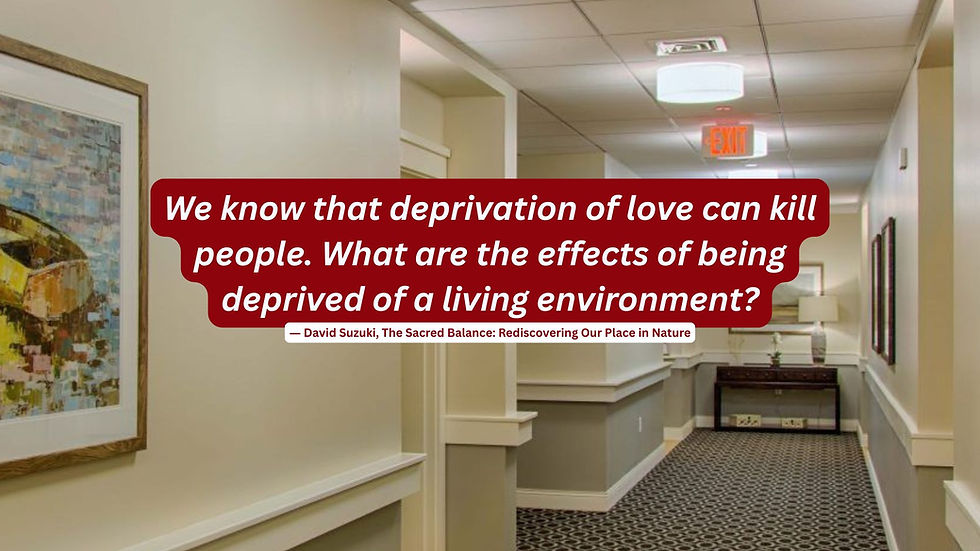
slide from my presentation "Eco Gerontology: Aging, Care and Our Relationship with Nature"
Life is both dreadful and wonderful – Thich Nhat Hanh
I have been on a digital detox since I returned home on Friday, April 17th.
Today, April 22nd, was the first day I typed out the experience.
April 16th, 2026, Indianapolis, Indiana
Sleep came in fragments as I was still coming down from the intensity of presenting at my alma mater for the first time in public: Eco Gerontology: Aging, Care, and Our Relationship with Nature, sharing excerpts from my book still in process, from my two courses, and from my applied research and practice. I was also relishing the wonderful moments shared with my aunt and uncle, whom I had not seen in 37 years.
I awoke early again to the bird song at 4:30 AM and began to pack, shower, and make coffee. I went on a long Awe Walk in the Old Northside historic neighborhood, noticing the birds, feeling so much gratitude, and filled with a deep sense of accomplishment for my pioneering work in Eco Gerontology. I did not just present Eco Gero and Care Outdoors, I live and breathe it every day, a mission greater than myself:
~ Connecting All Ages to the Goodness of Our Shared Home ~

After my Awe Walk, I returned to the bed and breakfast and enjoyed a slow, deliberate meal, feeling the glow of gratitude, emotionally steady, preparing for what I thought would be an 11-hour journey home.
Even though my other Uber experiences had been less than enjoyable, this one arrived with Motown music. I asked to roll the window down, and when he noticed me singing and moving to “War (What Is It Good For)” and “My Girl,” he turned the volume up.
I arrived at the airport two hours early, as I prefer to not feel stressed. This was only the second time I had traveled by airplane in the last eight years. I was still immersed in the afterglow of my presentation, and I boarded my flight to Chicago.
We sat on the tarmac for 30 minutes, then an hour. The passenger next to me, William, was young, vibrant, and traveled weekly for work. “Yeah, this happens,” he said when the pilot announced we were waiting for clearance from air traffic control and refueling.
Then came another announcement: 45 passengers, including myself, on our plane had lost their connections out of O’Hare. We sat for over two hours without water or food, confined in a non-moving aircraft.
Eventually, we were told to deboard and enter long,
restless lines of disoriented travelers.

While waiting, I met a grandmother in a wheelchair, her daughter, and granddaughter traveling from Indianapolis to Vermont to tour a college. Their flight had also been delayed, and they spoke of their 40-acre farm.
The grandmother, with tears in her eyes, shared that they may lose it to a data center. They had never heard of green care farming or multifunctional agriculture, which I had shared in my presentation.
My presentation had focused heavily on the windows of opportunity in Indiana, where I had researched that Indiana has over 54,000 farms, and 94 percent are still family-owned, and I showcased how multifunctional agriculture is a powerful, multi-pronged solution to the financial, ecological, and community crises facing the region.
I felt her grief in my body. I wished she had been in my audience. She seemed so defeated. This land that grows food, community, and biodiversity, the living systems we are interdependent with, is being replaced by infrastructure that is extractive, toxic to air, soil, sky, and watersheds, contributing to the extinction of species including the swamp rabbit, barn owl, and monarch butterfly, which once lost will not return.
The announcement came that we could reboard the plane for Chicago, and since United Airlines had already stopped texting me updates, other passengers in line with me advised I go ahead and reboard, as it would be easier to get to LAX out of Chicago than Indianapolis.

We boarded the same plane again, and I settled into my window seat beside William. We were still in good spirits, though I still had not eaten, and my water bottle was low. I shared the science of awe, as I had in my presentation, and how even brief experiences of awe boost vagal tone. “Look it up,” I said. He did, smiling. I also shared laughter yoga, that I am a non-certified laughter leader, with a capital NC, and we shared a few “ho ho ha ha ha’s” together.
It would be another two hours before the plane elevated into the sky.
By the time we reached O’Hare International Airport, I had been in transit for over ten hours. I was disoriented, exhausted, and emotionally frayed.
At the airport, I immediately asked, “Where can I get help? I need human help, customer service help.” The attendant kept his eyes facing down, merely said, “You need to use the APP or QR Code,” pointing to a sign.
The United Airlines app had stopped working for me hours ago, and I needed a real human. I had no idea how I was going to get home, and it was getting late, already 7:30 PM Chicago time.
There were so many people shuffling about, crowded, I felt uneasy and began to panic. I found a seat in a corner and called my loved one who was waiting to coordinate my pickup in Monterey. As I explained the situation, I could feel the tears begin to flow, and I decided not to hide them, just let them come. My fatigue, dehydration, disorientation, and the absence of human assistance had become too much to endure.
Looking around, I noticed people watching me, yet no one seemed connected enough to come ask if I needed help. I felt isolated in a swirling sea of humans, and I noticed Trump’s troops [ICE], and it generated an instant rush of cortisol as I struggled to figure out how I was going to get out of the chaos.
I thought for a moment how it must feel to live with dementia, trapped in a place without life, trees, birds, sky. This is how the airport felt. There were no outdoor spaces, I had not been outside in more than ten hours, and not even a human to help.
I felt abandoned not only by the United Airlines, but by the digital system now in control, the same system that was not working. I wandered the airport searching for help, but every path led back to another app, another QR code, another absence of human connection.
I returned to the corner seat and cried again.
Eventually, I tried the QR code. My phone was nearly dead. A chat window opened, and I typed that I was in distress, having a panic attack, and needed a real human. It was difficult to write and see through swollen eyes.
After several exchanges, I read: “Ma’am, can you hear me?”
I picked up my phone and finally heard what felt like a live human voice, or at least something steady enough that my body began to settle. After about 20 minutes, she booked me on a flight to LAX around 8:00 PM, though I would not reach Monterey until the next morning.
I boarded the full flight out of Chicago to LA. I had still not eaten, and I was worried about arriving in LA at 11:30 PM, where was I going to stay? I sat between two women, one I will call Jamaica, as she was returning from a vacation there. I shared my experience, and they both responded with empathy. They told me that when we landed in LAX, someone, a human, would help me find a hotel and everything would be alright. My phone was dying, and I could not face another app.
Jamaica bought me a glass of wine; “pay it forward,” that helped settle my nervous system enough to rest into a film for the next few hours.
At LAX, I immediately asked for help finding a hotel. I was again told to use the app.
My body dropped. Jamaica overheard and insisted I be helped. Reluctantly, the attendant used her own phone, and what began as a meal voucher became a hotel voucher, and she booked me at a Holiday Inn.
It was nearly midnight as I followed signs, got lost, took elevators, and met others just as perplexed as I was, all of us feeling the weight of our over-digitalized world and how disjointed things have become.
Things that once felt simple, when humans still did these jobs, are now replaced with apps and Artificial Intelligence.
After a long wait in line, I finally checked in and made it to the fourth floor, only to realize the key card did not work. I stood in the hallway and cried again. It was well past midnight. Food was no longer happening, but sleep, I desperately needed sleep.
I returned to the front desk and found an even longer line. A young Indian man saw my distress and said, “Ma’am, don’t cry, I’ll help you.”
He came back with me, we tried the key card again, and when it still did not work, he apologized. I was so thankful for his kindness to a stranger. On the walk back, he shared my concern about how quickly artificial intelligence is becoming normalized, how we are being replaced, how the human experience itself is being replaced.
I stood in line again, finally got a new key card, entered the room, showered, wrapped cool dampened towels sprinkled with peppermint oil around my feet and on my forehead, the healing artist in me comes in handy in moments like this, and I was able to sleep about four solid hours.
The next morning, I got on an early shuttle back to LAX and enjoyed a good conversation with a man from Houston, also going to the United terminal. We talked about my experience, about AI, and big tech. He shared how our privacy rights are being infringed on, driverless cars, and even restaurants that are fully staffed by AI and robots. We reminisced about growing up playing outdoors, and how the average American child spends less than 4–7 minutes outdoors in unstructured play. Upon arriving at our terminal, I shook his hand and thanked him for sharing conversation.
After going through TSA, I became elated. I made it, I was finally on my way home. One more plane to board, and even if this one was late, I had no other connection flights.
I found a restaurant across from my gate and ordered a full breakfast, my first real meal in more than 24 hours.
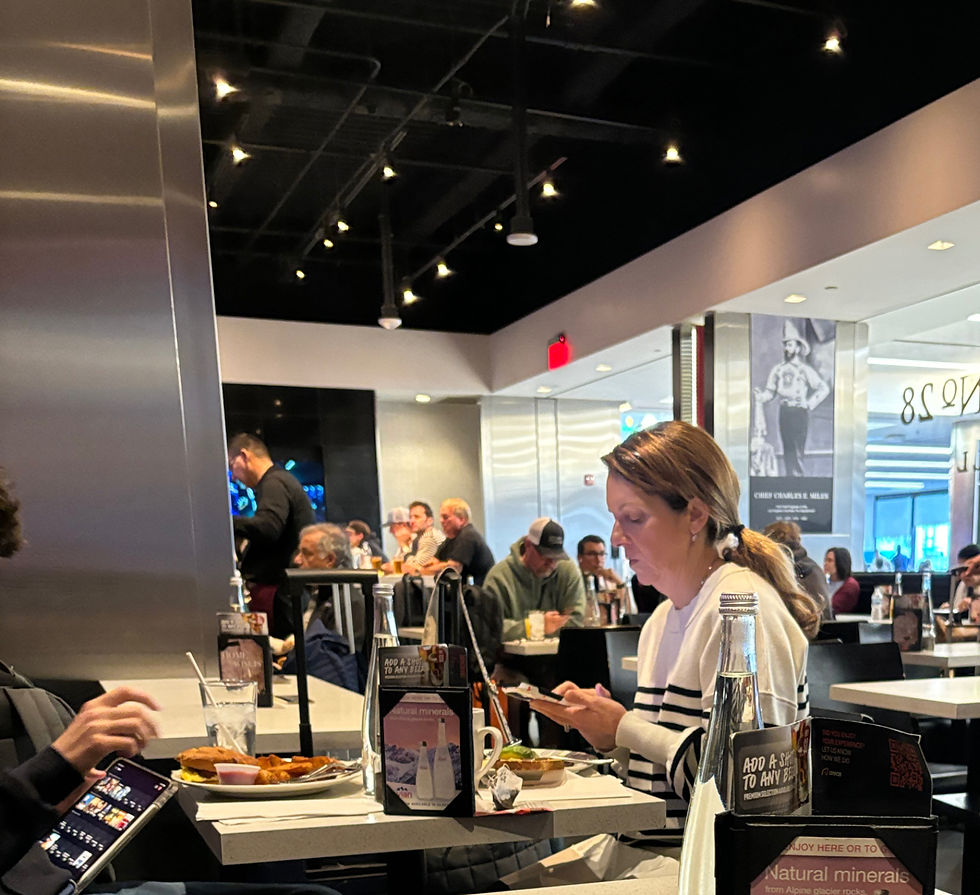
Nestled in a corner booth, I noticed how most people were absorbed in their screens.
A mother and her son, about fourteen, sat at the table to my right.
When their food arrived, they spoke briefly, then the mother pulled out her iPhone and the son a large iPad.
Neither looked away from their devices, not even while eating.
The world felt eerily digital and disconnected.
I could hear Twilight Zone music and felt like I was inside a Stephen King horror, “a digital nightmare”, except this was not fiction. This was reality.
And yet I thought: here I am, The Eco Gerontologist, returning from sharing the science of nature connectedness, the environmental mismatch hypothesis, and how our health and the health of our shared home, Earth, are wholly interconnected.
I had not realized how quickly our society has normalized big tech in every aspect of our lives.
Life is both dreadful and wonderful
In this dreadful, digital experience, I am so thankful for finding what Mr. Rogers called “helpers,” the strangers offering presence in moments of rupture.
I experienced how quickly digital systems become impersonal when the digital infrastructure fails, and how few real humans remain to assist when it does. And this is just the beginning of what the technofascists have in store for us.
28 Hours Later:
When I finally returned home to Monterey on April 17th, a New Moon, I took a deep breath of gratitude.
It took days to reorient, as I logged off all my digital devices for three full days, a digital detox was in order.
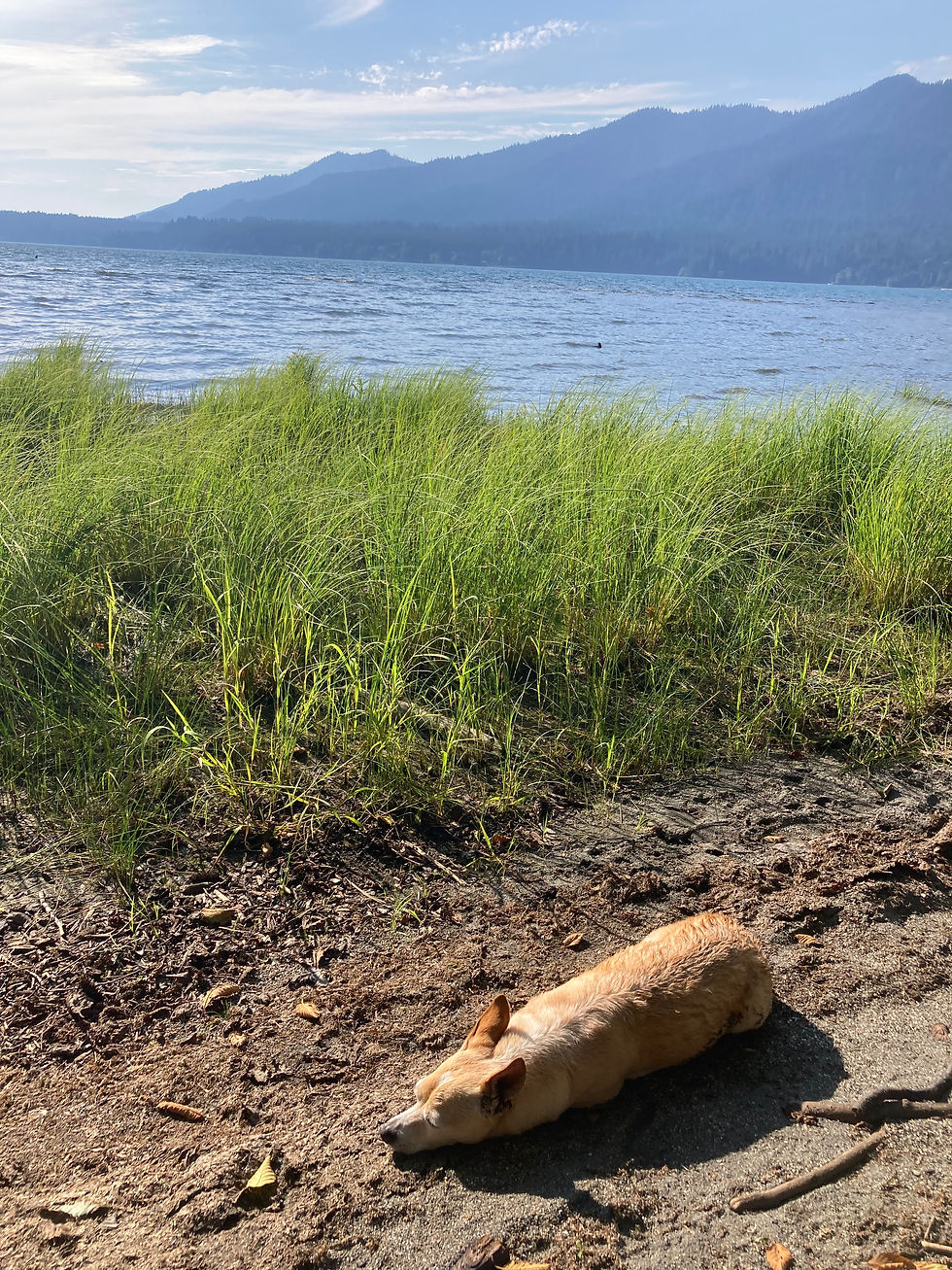
It felt so good to put my hands in the soil, play with my dog, clean the chicken coop, fill the bird bath, and feel the hummingbirds welcome me home.
As I type, I reflect on the movement toward “Nature Prescriptions” and all the research showcasing how the Nature Experience improves our health and wellbeing, even as we continue to lose the biodiverse natural environments those studies are based on.

Since the first Earth Day in 1970, our shared home, Earth, has experienced a 73% decline in wildlife populations.
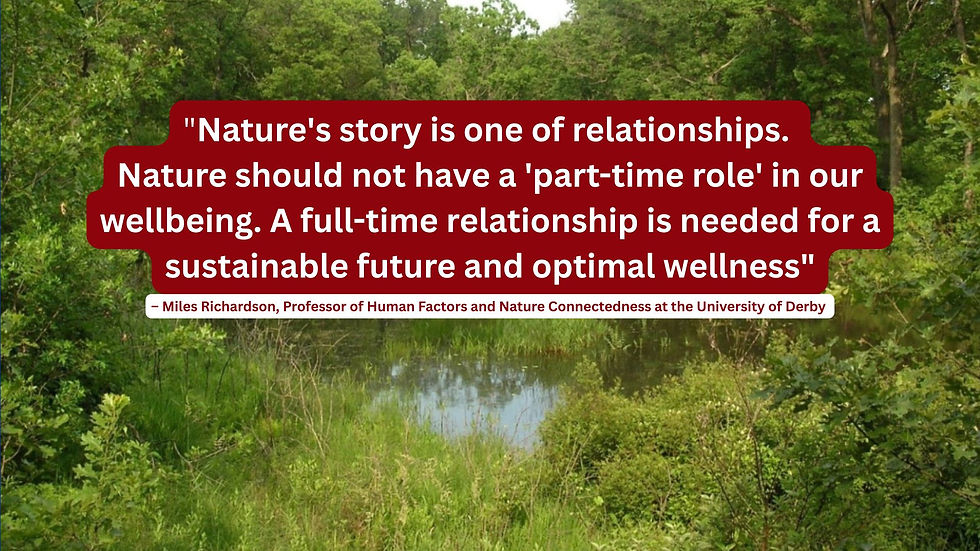
Nature’s Health = Human Health
Relationships are being lost, with each other and with home, Eco.
I still hold active hope that we can repair our relationship with Nature, with all our relations, flora, fauna, watersheds, air, bioregions, not through algorithms, apps, QR codes, AI, or Age Tech, but through real connection, real relationship, and embodied presence with Home.
Five days later, and I am still recovering, disoriented and exhausted.
And there is a part of me that weeps.
How can we slow down, pause, and reconnect with life when our lives are now so wholly interwoven with technology, with digital systems absent of emotion? Are we losing our humanity? Is it already lost?
May we be inspired today, and every day, to go outdoors and immerse our senses.
Notice the beauty of Nature, the living systems we are interconnected with, birds, plants, butterflies, sky, and water.
May we grow curiosity and restore relationship with Home, with our bioregion, and with the Indigenous peoples, past and presnet, who live in harmony with Home.
Let's reconnect with Home, not as prescription, but as relationship.